Hangman - Classical Word Game
GeniusTools LabsWord
4.720.00 Reviews
- Version
- 2.1.1
- Installs
- 100.00K
- Age Rating
- Everyone
Screenshots
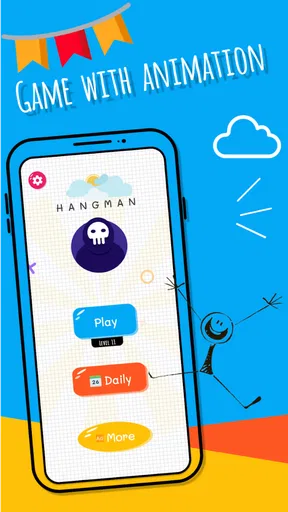
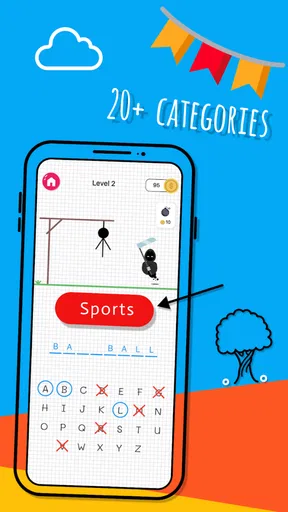
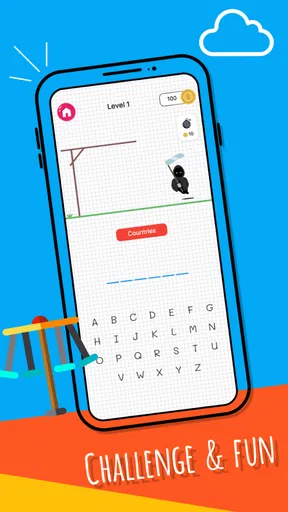
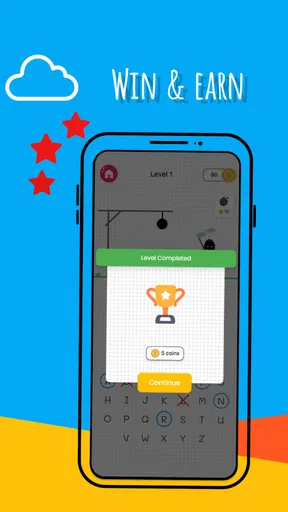
Our Review of Hangman - Classical Word Game
 Analysis by Appyee
I came back to Hangman - Classical Word Game because it understands the appeal of a very small challenge. You look at the empty word, choose a letter, watch the puzzle react, and decide whether one more guess is worth the risk. There is no complicated tutorial to learn and no long setup before the first round. For a quick word-game break, that directness is the main attraction.
After spending time with it, I see this as a traditional hangman game from GeniusTools Labs aimed at people who enjoy guessing vocabulary under light pressure. It is free to start, rated for Everyone, and available for devices running Android 6.0 or later. The current version is 2.1.1, and the game has reached over 100 thousand installs with a 4.7 average from around 1.6 thousand ratings. Those figures suggest that its simple format is connecting with a fairly broad audience, although the experience itself remains deliberately modest.
How the guessing loop feels in real use
I find the guessing loop works best when I treat each letter as a way to learn something, not just a shot at the answer. A wrong guess can still narrow the field, while a revealed letter may change which possibilities seem realistic. That small shift in approach also helps explain why a round can feel tense even when the rules are familiar.
The first action is almost immediate
The best part of the opening moment is that I do not have to prepare myself for a large game system. The central task is familiar: identify the hidden word by selecting letters. I can begin with a common vowel, test a likely consonant, or use the visible pattern to make a more informed choice. That first decision matters because a correct letter gives me useful structure, while a wrong one moves the hangman closer to its unhappy outcome.
This makes the game approachable for children, casual players, and anyone who wants a few minutes away from a busier app. The Everyone content rating fits that accessible presentation. I would still guide a young child at first, not because the rules are difficult, but because the game rewards patience and vocabulary more than fast tapping. It is easy to understand after one round, and that low barrier is more valuable here than a long explanation.
My preferred opening is not always the most obvious letter. If the word pattern already shows several spaces, I look for a letter that can separate possible answers rather than simply choosing the first common character that comes to mind. This turns a basic guessing game into a small exercise in probability. The board gives enough feedback to make each choice feel connected to the next one.
That said, the first move can also expose one of the game’s limitations. Players who already know hangman well may find the initial challenge too familiar. There is no need to discover a new control scheme or learn a special mechanic; the enjoyment comes almost entirely from the word itself and from how carefully I manage guesses. If you want a word game built around elaborate progression, this is not where you will find it.
Every guess creates a clear feedback rhythm
The rhythm is easy to follow: choose a letter, see whether it belongs in the word, and adjust the next choice. A correct guess improves the pattern and gives me a small burst of confidence. A wrong guess provides the opposite kind of information, narrowing the margin for error. That immediate response keeps the round readable even when I am playing quickly.
I like that the feedback is meaningful rather than decorative. A revealed letter is not merely a reward animation; it changes the problem in front of me. Once I see a repeated character or a distinctive ending, I can stop guessing blindly and start testing actual possibilities. The game therefore works best when I treat each turn as a clue, not just as a button press.
One useful habit is to keep track of letters that have already failed instead of relying on memory. On a short word, this is easy, but longer or less familiar words can make careless repetition surprisingly costly. I also avoid guessing a letter only because it appears in the first answer that enters my mind. If the visible pattern supports several words, I choose a letter that is likely to distinguish them. That approach gives the simple interface more strategic depth than the short store summary suggests.
The feedback rhythm is particularly comfortable during small pauses in the day. I can play a round while waiting for an appointment, during a short commute break, or when I want something quieter than an action game. It does not demand the kind of sustained attention that a long puzzle campaign might require. At the same time, a difficult word can hold my attention longer than expected because each failed guess makes the remaining choices more important.
There is a trade-off here. The same clarity that makes the game welcoming can make it feel repetitive over a longer sitting. I do not get the sense that every round is building toward a complicated objective. The pleasure is in solving the current word, not in uncovering a larger system. I would recommend short sessions rather than treating it as a game to leave open for an entire evening.
The reward is solving the word, not collecting a large progression
For me, the main reward arrives when the final missing letters click into place. It is a small victory, but it feels earned because I have balanced useful guesses against the limited room for mistakes. Even when I solve a word quickly, the satisfaction comes from seeing the pattern confirm my reasoning. When I struggle, the eventual answer feels like a release from the tension created by the wrong guesses.
This is important when deciding whether the game suits you. If you enjoy the clean satisfaction of a completed word, it can be surprisingly effective. If you need coins, character upgrades, competitive rankings, or a narrative reason to keep playing, the traditional format may seem thin. I would not choose it as a substitute for a larger word-game collection with multiple modes. I would choose it when the act of solving is enough.
The game also has a useful educational side, although I would not treat it as a complete learning tool. Players can encounter unfamiliar spelling patterns and practice thinking about word structure. A parent could use a round as a casual vocabulary prompt by asking why a particular guess was sensible or what other words might fit the revealed letters. The game does not need to become a lesson to encourage that kind of conversation.
For an adult player, the reward is more about mental reset than formal practice. I often find that a short guessing session gives me a clean break from scrolling because it asks for active decisions without overwhelming me. There is a difference between passively consuming content and testing whether a letter belongs in a hidden word. This game sits on the more active side of that divide while remaining easygoing.
The free price makes experimenting straightforward, but the presence of in-app purchases is worth remembering. Items are listed from $0.49 to $99.99 each, so I would check the purchase flow carefully before handing the game to a child or allowing unsupervised use on a shared device. The core appeal is the guessing loop, not spending money to make the loop meaningful. Anyone who prefers a completely purchase-free environment should take that into account before installing.
Resetting the session is part of the appeal
Once a round ends, the natural question is whether I want another word. That reset is almost frictionless in concept, and it is the reason the game works well in short bursts. There is no need to remember a complicated story state or rebuild a strategy from several menus. I finish, reflect briefly on the guesses that helped or hurt, and start again if I still have the appetite for one more puzzle.
A realistic use case is a ten-minute waiting period. I can begin a round, make a few careful guesses, and either complete it or leave the game when my time is up. If I return later, the familiar rules let me resume the habit without relearning anything. This is more convenient than a word game that expects a long uninterrupted session or asks me to manage several kinds of resources before playing.
The reset also creates a useful personal challenge. After losing, I may replay with a better opening approach: test a vowel earlier, avoid repeating a failed consonant, or use the visible pattern before committing to a guess. After winning easily, I may try to solve the next word with fewer errors. These goals come from my own decisions rather than from a formal achievement structure, and that can be either refreshing or limiting depending on what motivates me.
Players who dislike repeating a similar task may reach the end of the loop quickly. The game’s identity is tied to the classic hangman structure, so the reset does not introduce a radically different activity. That consistency is excellent for accessibility but less appealing for people seeking constant novelty. In my view, it belongs beside other casual games rather than replacing every other form of word entertainment.
Compared with a crossword, this is faster to enter and less demanding in terms of clues and grid management. Compared with a word-search game, it asks me to reason about missing letters instead of scanning a crowded board. Compared with a daily word puzzle, it feels less tied to a single routine and more suitable for repeated short attempts. Those alternatives are better when I want richer clues, visual variety, or a stronger sense of a daily ritual. This game is better when I want the rules to disappear and leave only the guess.
Who will get the most from it
I would recommend it to someone who enjoys classic word puzzles, wants a simple game for spare moments, or is introducing a child to the basic idea of letter deduction. The Everyone rating and straightforward controls make the starting point comfortable. It can also work for players who prefer games that do not require fast reflexes. Success depends on observation, vocabulary, and managing risk rather than on tapping quickly.
It is also a reasonable choice for a family device, provided the adult responsible for the device handles the purchase settings sensibly. A parent and child can take turns suggesting letters and discussing why one guess is stronger than another. That turns a solitary puzzle into a small shared activity without changing the rules. I especially like this use because it gives the game more value than simply filling a few idle minutes.
I would skip it if your priority is a deep campaign, a large collection of distinct modes, or extensive competitive features. I would also look elsewhere if you want detailed explanations for every word, advanced language-learning exercises, or a puzzle format that changes dramatically from round to round. The traditional design is the point, but it is also the boundary.
Another consideration is tolerance for repetition. Someone who enjoys familiar routines may appreciate being able to start another round without ceremony. Someone who needs constant unlocks and surprises may interpret that same simplicity as a lack of content. Neither reaction is wrong; it depends on whether you want a dependable guessing tool or a broader entertainment package.
Small strategies that make the game more satisfying
I get better results when I separate information gathering from answer hunting. Early in a round, I choose letters that can reveal several positions or help eliminate multiple possible words. Later, once the pattern is distinctive, I switch to completing the likely answer instead of continuing to make broad guesses. This two-stage approach reduces the feeling that I am choosing letters at random.
Another practical tip is to treat repeated letters as valuable evidence. If one correct guess appears in more than one position, the word’s shape becomes easier to recognize, and I can use that shape to reconsider earlier assumptions. I also pay attention to common endings and beginnings, but I avoid forcing a familiar word onto a pattern that does not support it. Hangman punishes confidence without checking.
For children or new players, I would encourage saying the pattern aloud. Hearing the spaces and revealed letters can make the word structure easier to process than looking silently at the screen. It also turns each round into a chance to discuss spelling without making the activity feel like a test. More experienced players can use the same technique mentally when they are stuck.
Finally, I recommend stopping after a frustrating loss rather than immediately tapping through several careless rounds. The game is most enjoyable when each guess has a reason. A short pause often makes the next session feel fresh, while rushing into another attempt can turn a pleasant puzzle into repetitive button pressing. That is a personal strategy, but it fits this game’s quiet pace well.
My verdict on the complete loop
The action-feedback-reward-reset cycle is the whole experience, and it works because every part is easy to understand. I choose a letter, receive a direct clue, feel the satisfaction or pressure of the result, and decide whether another word deserves my attention. The loop is compact enough for a brief break but thoughtful enough to reward better guessing habits.
The strongest reason to try it is its clean, low-pressure word challenge. GeniusTools Labs has kept the focus on the classic format rather than surrounding it with unnecessary complexity. The 4.7 average and over 100 thousand installs show that many players appreciate that approach, while the free entry point makes it easy to test personally.
My final recommendation is positive, with a clear qualification: install it for quick traditional hangman rounds, not for a large progression-driven game. It is suitable for casual players, families, and word-puzzle fans who value immediate play. It is less suitable for anyone who needs constant novelty or a richer set of puzzle systems. When I want a simple reason to begin another session, this game gives me one: there is still a hidden word on the board, and I want to see whether my next guess is the one that opens it.
Verdict
Strengths of Hangman - Classical Word Game
- Simple rules make it easy for anyone to start playing immediately.
- Short rounds are ideal for quick entertainment during spare moments.
- Helps improve spelling and expand vocabulary through repeated word practice.
- Classic gameplay works well for both children and adults.
- Usually playable offline, making it useful without an internet connection.
Limitations of Hangman - Classical Word Game
- Repeated word categories may make the experience feel predictable over time.
- Some puzzles can be frustrating when the answer uses an unfamiliar word.
- Limited gameplay variety may not satisfy players seeking deeper challenges.
- Ads may interrupt the experience in the free version.
- Small screens can make letter selection less comfortable for some users.
Other Releases by GeniusTools Labs
View All
Trace Drawing: How To Draw
Art & Design4.6

Widget 2026: Aesthetic Widgets
Personalization4.6

GPS Maps Voice Navigation App
Maps & Navigation4.8

Sweet Editor Camera Lite
Beauty4.6
Similar Picks in This Category
View All
Word Search - Word Puzzle Game
Bluetile4.8

Word Search Quest - Puzzles
Blackout Lab4.8

CodyCross: Crossword Puzzles
Fanatee, Inc.4.7

Words of Wonders: Crossword
Fugo Games4.9

Wordscapes: Word puzzle game
PeopleFun4.7

Word Search Explorer
PlaySimple Games4.9
Frequently Asked Questions
How do you play Hangman - Classical Word Game?
Hangman - Classical Word Game follows the traditional word-guessing format. A hidden word is displayed as blank spaces, and you choose letters that you think belong in the answer. Correct guesses reveal matching letters, while incorrect guesses add another part to the hangman drawing. The objective is to solve the word before the drawing is completed. The rules are simple, making it suitable for quick sessions or longer vocabulary practice.
Does Hangman - Classical Word Game work offline?
The game is generally designed for convenient play without requiring a constant internet connection, which makes it useful during travel, commutes, or in areas with limited service. However, certain features may depend on connectivity, including advertisements, updates, online rankings, or other connected content. After installing it, it is worth opening the game once while online so its resources can load correctly before attempting to play offline.
Is Hangman - Classical Word Game suitable for children?
Hangman - Classical Word Game can be appropriate for children who are comfortable reading and spelling basic words. It encourages vocabulary development, letter recognition, concentration, and logical thinking through a familiar guessing mechanic. Parents should still review the available word categories, advertising behavior, and any in-app links, since suitability can vary by age and device settings. Younger players may benefit from playing with an adult.
Does the game include different categories or difficulty levels?
The available experience may include word categories, themed vocabulary, or progressively more challenging puzzles, depending on the version installed and the platform. Easier words are helpful for beginners, while longer or less familiar terms provide a greater challenge for experienced players. Before downloading, check the current store description for the exact modes and content included, because updates can change the number of categories, levels, or game options.
Are there advertisements or in-app purchases in Hangman - Classical Word Game?
Many free mobile word games are supported by advertising, and Hangman - Classical Word Game may display ads between rounds or during navigation. Some versions can also offer optional purchases, such as removing advertisements, unlocking content, or receiving additional hints. The precise pricing and purchase options can differ between Android and iOS, so review the relevant app-store listing and parental purchase controls before installing or allowing children to play.
Play our best games!


